
Hancock County Deed Records by Instrument Type
The Hancock County Clerk of Superior Court serves as the recording office. It handles land instruments across the county. Its books hold warranty deeds, security deeds, liens, easements, and plats side by side. The instrument heading matters. Two filings with identical names can do entirely different legal work. Read the granting clause, the legal description, and any reservations. Also check the cited references before assuming a result is a sale.
| Deed Type | What It Does | Common Use |
|---|---|---|
| Warranty deed | Conveys the stated land with deed warranties | Ordinary conveyance |
| Quitclaim deed | Conveys the grantor's stated interest without broad warranties | Interest transfer or title cleanup |
| Executor or administrator deed | Transfers through an estate representative | Estate administration |
| Tax or sheriff's deed | Records a sale arising from a statutory process | Tax or execution research |
| Corrective or re-recorded deed | Corrects or republishes part of an earlier instrument | Name, description, or recording correction |
| Security deed and cancellation | Creates or releases a secured interest | Financing and release trail |
A security deed, lien, or easement can burden an interest. It does not convey the ownership a searcher is actually chasing. Keep those related instruments in a separate column of the chain. That way the picture stays clean. Execution date and recording date are not interchangeable, and both belong in the worksheet. Save the preparer as well. Save the return-to address, notary and witness blocks, consideration language, attachments, and any prior deed citation too. Small details separate two similar filings. They also explain why a later document refers back to an earlier volume. That reference is often the only clue that a correction or partial release occurred.
Search Hancock County Deeds in the GSCCCA Index
The Georgia Superior Court Clerks' Cooperative Authority real-estate index is the statewide online route, and the local Clerk links to it. Party-name, book/page, and selected property or subdivision searches all work there. Address search sits behind premium access.
| Control Seen | How to Use It | What to Preserve |
|---|---|---|
| Party type | Choose the transfer side or other indexed role | The exact selected role |
| Last and first name | Follow the displayed name arrangement | Initials, suffix, fiduciary, and entity spelling |
| Instrument type | Narrow a crowded result set | The selected category and omitted variants |
| County and neighboring counties | Keep Hancock fixed before widening geography | Each geographic scope as a separate search |
| Date range and page count | Limit and document the return set | Dates, pages reviewed, and result count |
Coverage is the first thing to understand. The index reaches back to January 1, 1990. A separate GSCCCA statement describes all-county transactions since January 1, 1999, with earlier years still being added. Those are two different coverage claims. Neither promises that every Hancock filing has a viewable image. Broad queries fail in predictable ways. Narrow one control at a time, and note the result count after each change. When a query returns nothing, strip the instrument filter. Try initials and suffixes. Then fall back on a known book/page citation. Silence in the portal can mean a spelling problem, a date limit, a missing image, local indexing practice, or a temporary access fault. Treat it as a prompt to adjust, not a dead end.
What the Hancock County Deed Index Screen Contributes
Think of the online index as a locator, not the record itself. It returns indexed parties, the recording date, an instrument classification, and a book/page or instrument reference that bridges to the actual pages. That bridge is its real value. The GSCCCA authority homepage lays out account options, clerk-office access, and the connected real-estate services.
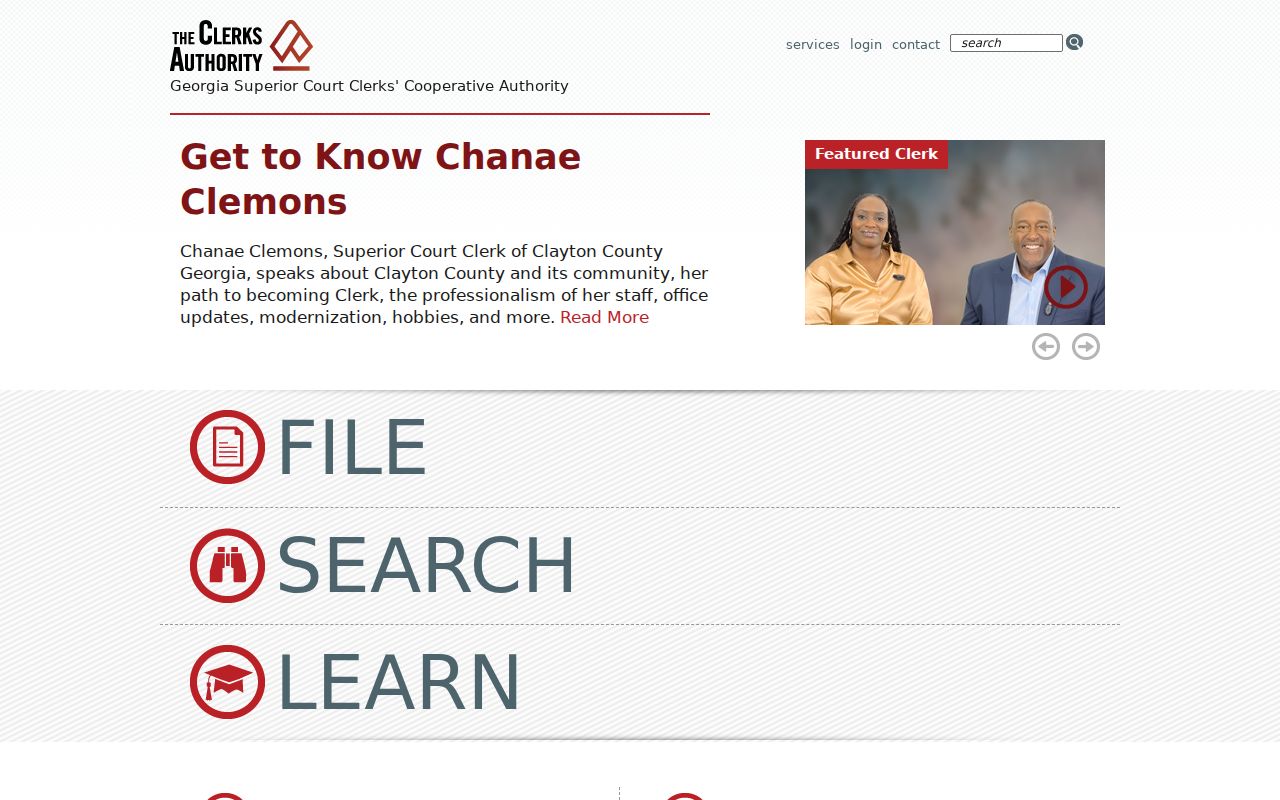
The service directory helps keep three things separate: the deed index, filing alerts, and the certified-copy workflow. The official GSCCCA real-estate search is the place to begin.
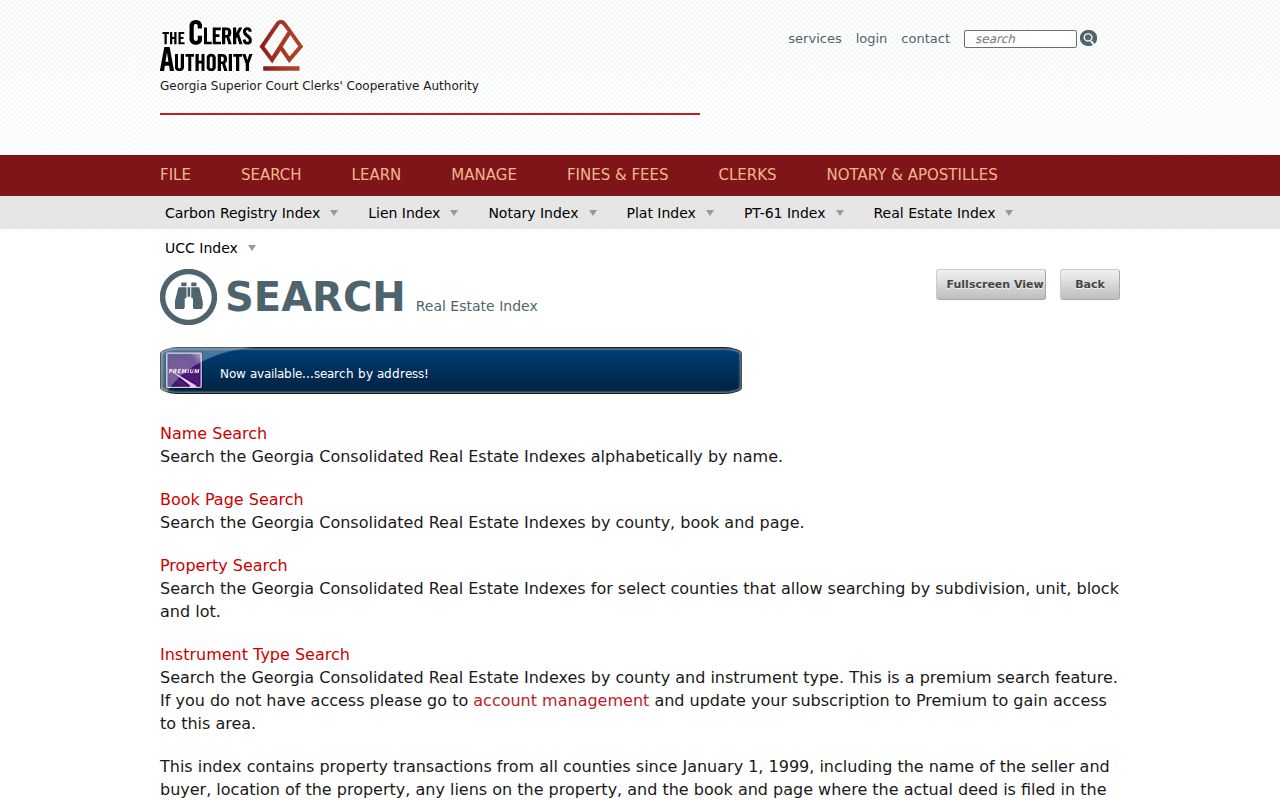
Note: Save the coverage banner with your search date, since it changes and never guarantees a viewable image for every indexed filing.
Follow Hancock County's Grantor-Grantee Links
A deed chain is assembled from instruments touching the same tract, not from repeating surnames. Begin with the newest likely conveyance. Confirm its land description first. Then use its grantor as the next search name. Working backward that way keeps the chain anchored to land rather than to a guess.
- Find the likely acquiring deed with the current assessment name as grantee.
- Verify county, recording date, acreage, parcel reference, and full legal description.
- Take that deed's grantor and search for the instrument by which that party acquired the same tract.
- Repeat through name variants, estate roles, tax deeds, corrections, and referenced plats.
- At the earliest returned result, note the tested cutoff and move to the Clerk or Archives books.
- Grantor
- The indexed party transferring the stated interest.
- Grantee
- The indexed party receiving the stated interest.
- Chain of title
- The ordered sequence of linked conveyances for the same land.
- Book/page or instrument number
- The recording reference used to retrieve a filed document.
Hancock County Grantor Names Need Variant Searches
Name variation is the ordinary condition of deed research, not an exception. The visible GSCCCA name form lets a searcher hold Hancock County and a date range steady while testing initials, middle names, suffixes, prior surnames, corporate punctuation, and executor, administrator, or trustee wording. Each variant can surface a filing the plain surname missed. The official party-name form shows the controls used to branch a query this way.
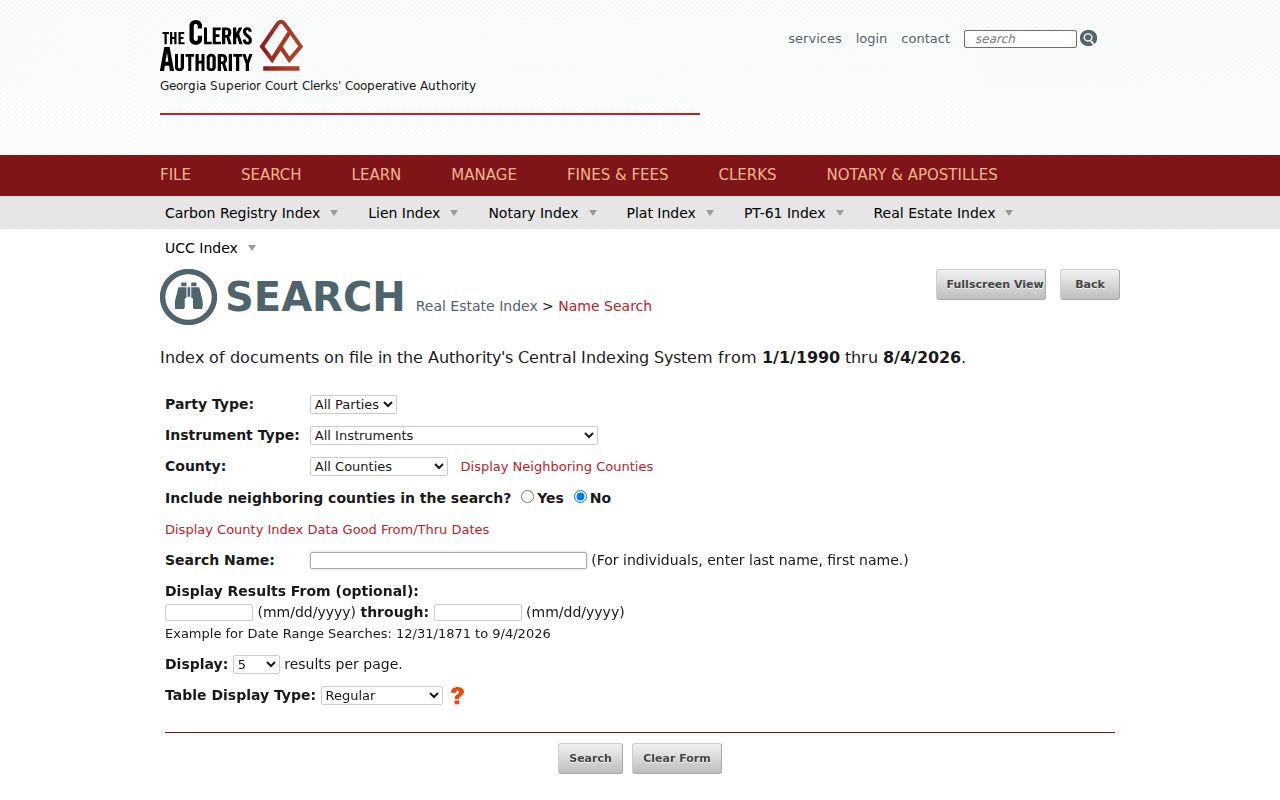
A result from a neighboring county belongs under expanded geography. Label it as such. It is not a Hancock deed until the indexed county supports that conclusion. The legal description should support it too. Small counties repeat names, which makes tract comparison essential. Acreage and district or subdivision wording can separate one person's land from another's. Adjoining owners, roads, streams, and earlier book references help as well. When the evidence stays ambiguous, record the uncertainty in the worksheet. Do not force the candidate into the chain.
Hancock County's 1790s Books Extend the Story
The Georgia Archives Virtual Vault adds a much older layer than the modern index reaches. Deed and Mortgage Book 1793-1795 is documented as unindexed and incomplete. It is damaged and inconsistently legible. It is also split into two pagination sequences. The 1795-1800 volume is also unindexed and incomplete, with staining, damage, and fading. Deed Book A, 1793-1798, carries an index but has stained pages. These condition notes are evidence in their own right. An index flag never promises that every page can be read. The earliest Archives book is also not the same thing as the earliest result a modern owner search returns. Keep the two ideas apart. Other Archives series feed the same story. Superior and Inferior Court dockets and minutes appear in the catalog. Execution records, land-lottery material, and estate files do too. Open each series and check its dates, index status, image access, and condition directly. A catalog hit can guide the search. It should never be paraphrased as though the underlying page had already been read. The Virtual Vault image for Deed Book A shows this historical access route.
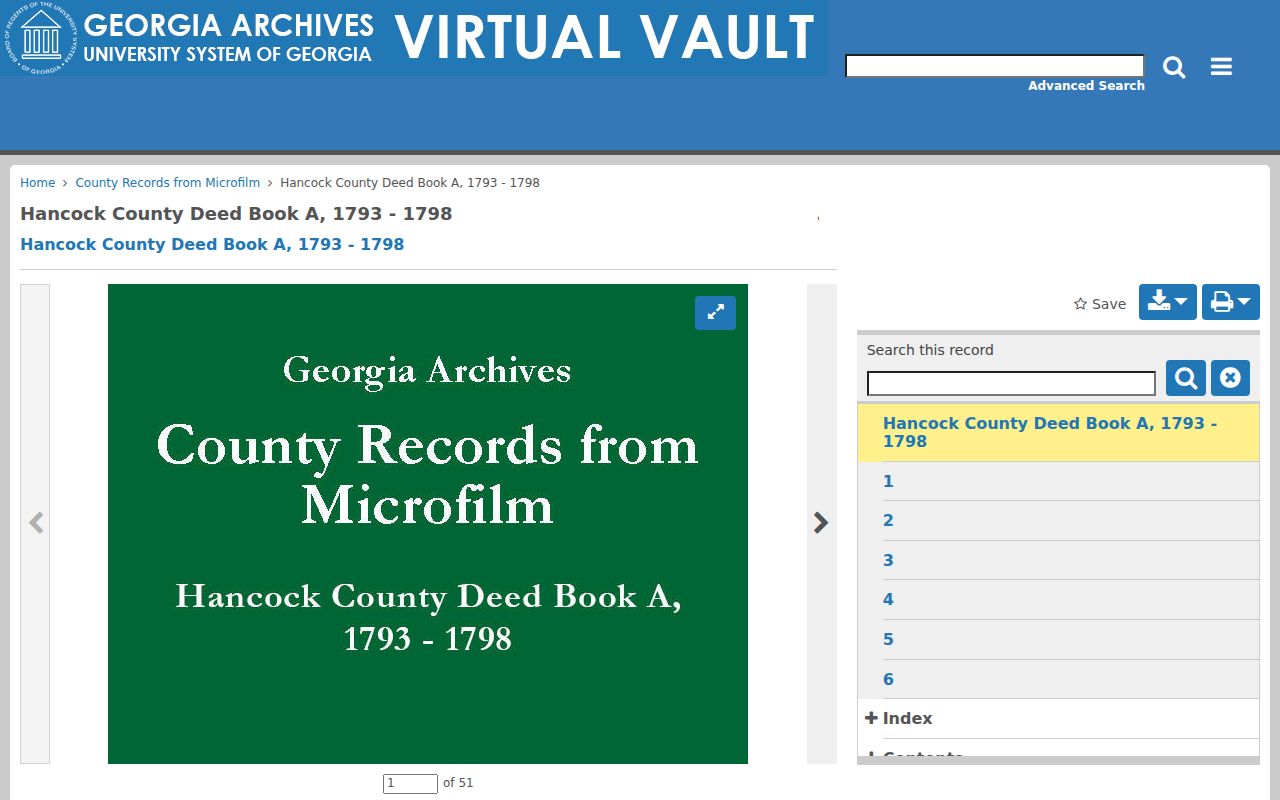
Before transcribing any name or description, record the catalog identifier, volume dates, indexed status, damage note, and image page. Future readers will thank you.
Plats, Liens, and Executions in Hancock County
A Hancock County deed can point to more than one supporting record. It may cite a standalone plat. It may cite a prior book and page, an easement, a right-of-way, a security deed, a release, or a correction deed. Search subdivision and developer names along with owner of record names. Then confirm lot, block, acreage, and any plat book reference inside the instrument itself.
Tax liens sit in a separate place. Georgia Department of Revenue guidance places them in the county clerk's general execution docket. Hancock's code also points to tax-sale and redemption law. An execution or a sale notice by itself never proves clean title. That conclusion takes its own docket and instrument check in the deed records.
FANS Watches New Hancock County Filings
Hancock County's local Clerk points property owners to the Filing Activity Notification System. FANS looks forward, not backward. It sends notices when qualifying records are filed, indexed, or transmitted. Notices go out only when filings match criteria you select. It is not the historical deed index. It also cannot promise to catch every single event in the property records.
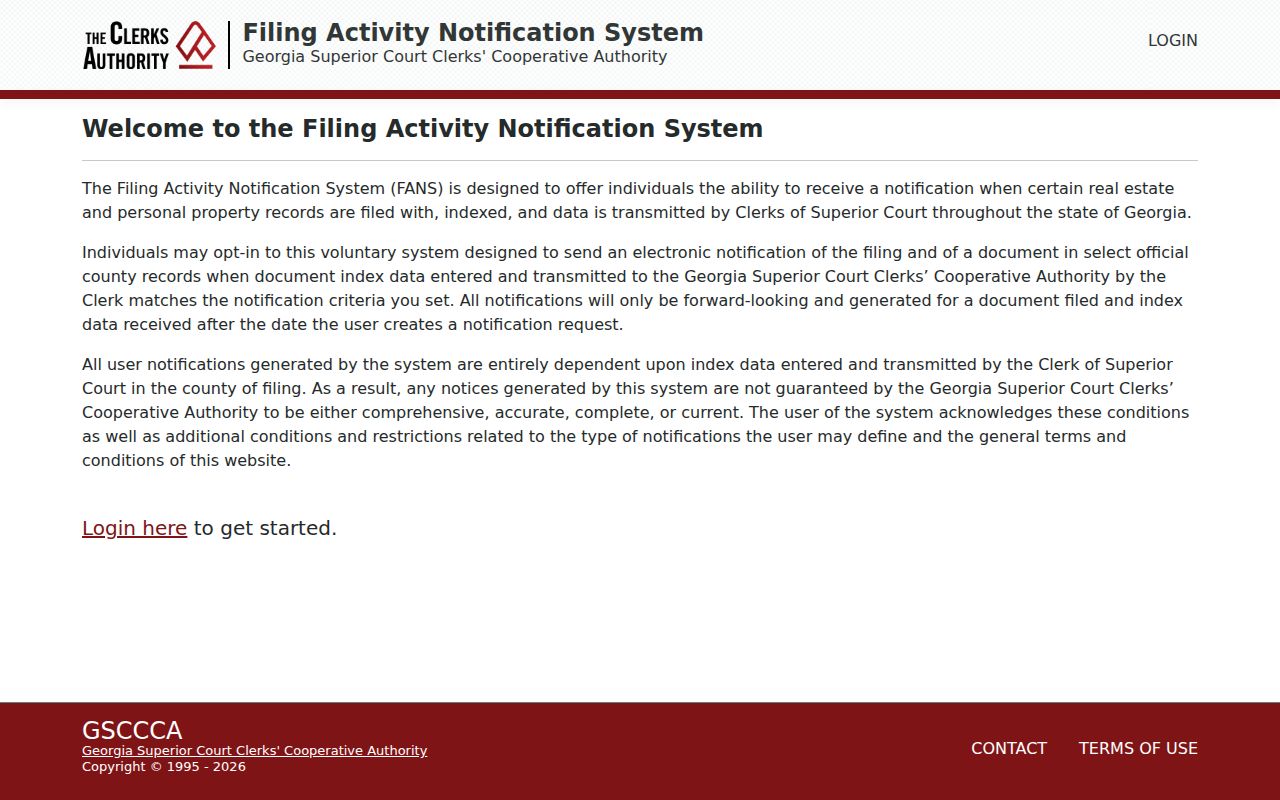
Start with a baseline. Save the current name spelling and instrument references first, and when an alert arrives, review it against the filed document itself. An unexpected entry deserves a call to the Clerk about the deed records.
Counter and Certified Instrument Access in Hancock County
Online access is not the only channel. GSCCCA offers limited, regular, and premium accounts, but the authority states that full access is free at Superior Court clerk offices. Check account pricing and image availability at the time of use.
The Hancock Clerk sits at 12630 Broad Street, Sparta, GA 31087, reachable at 706-444-6644, Monday through Friday from 9:00 a.m. to 5:00 p.m. Hancock also participates in eCertify, which requires a universal account. The counter remains the fallback for older deed books, missing images, local docket naming help, and certification questions. The official eCertify county list shows Hancock Superior Court as participating.
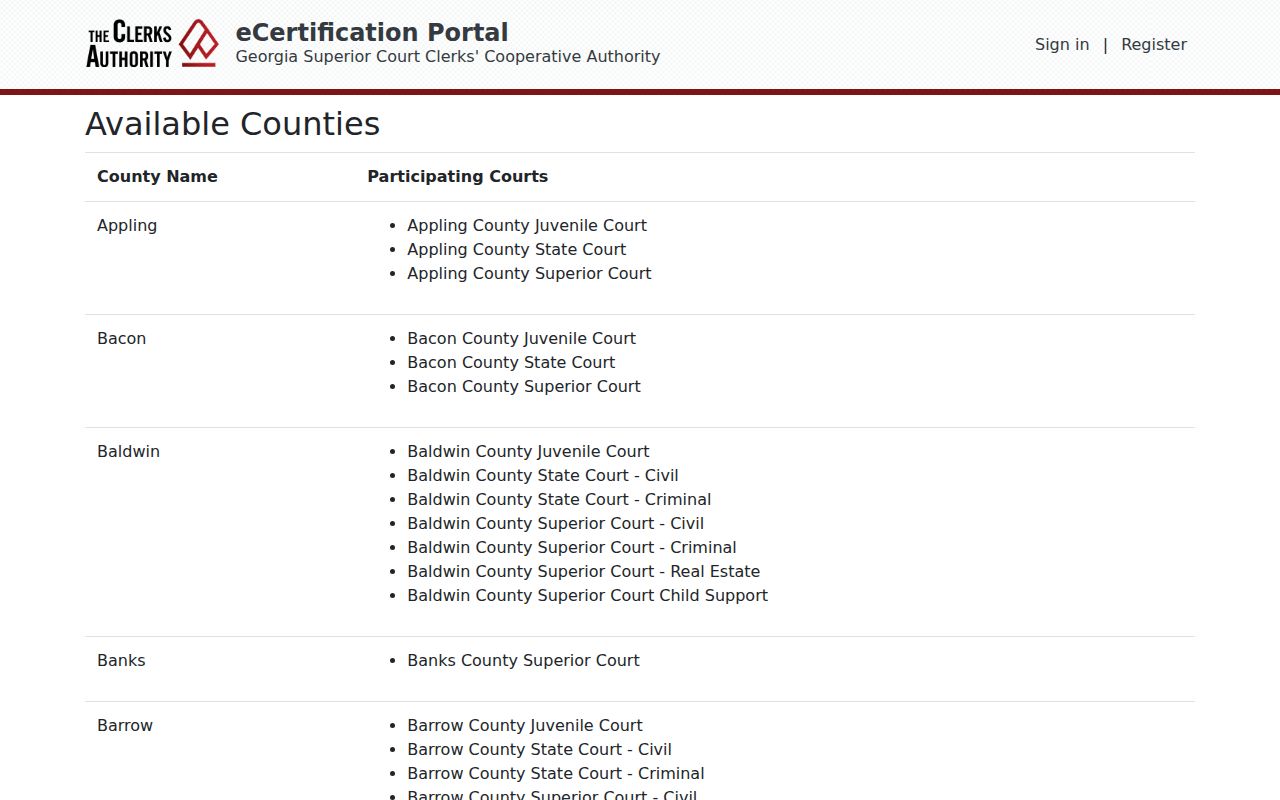
Participation signals an electronic certification route. Still, the universal-account requirement and current order terms need checking at the time of use.
A phone call can settle the best route. Mail, the public terminal, or eCertify may fit a particular deed citation. A precise request should name Hancock County. It should also list both indexed parties, the recording date, the instrument type, and the complete book/page or instrument number. Image and certification charges change. So confirm cost and delivery with the Clerk before ordering any property records.
Request a Hancock County Deed Copy with a Precise Citation
A precise citation makes everything easier. Bring the indexed county, instrument type, recording date, party names, and the book/page or instrument number to the Clerk. Ask whether an ordinary image or a certified copy suits your intended use. Confirm the current charge before ordering. If the online image is missing, request the recorded pages through the counter, phone, mail, or a focused Georgia Open Records Act request.
Recorded, not guaranteed. Hancock County deed records show filed instruments. They do not resolve every unrecorded interest, establish a surveyed boundary, or supply a title opinion.